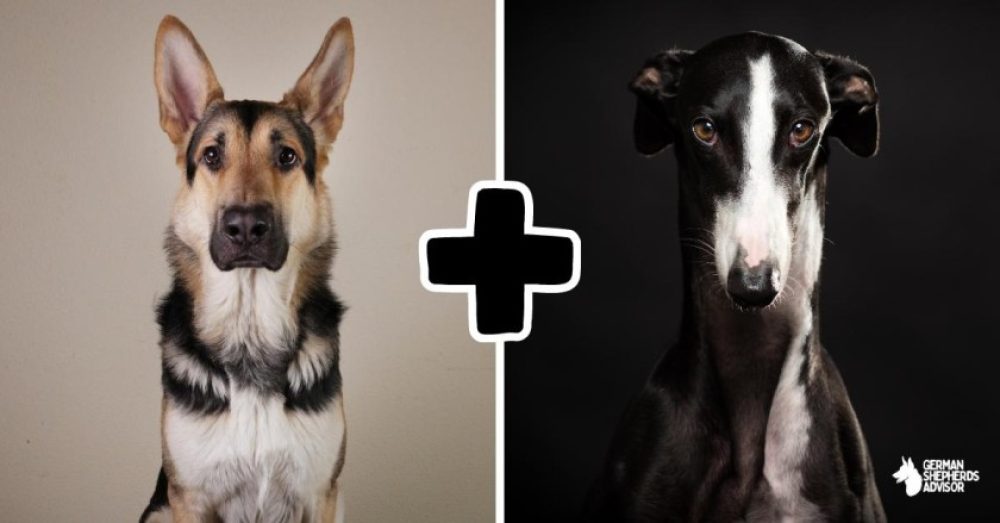
The German Shepherd Greyhound mix, also called the Shephound, German Greyhound, or Greyhound Shepherd, is a rare hybrid that blends the loyalty and intelligence of the German Shepherd with the grace and speed of the Greyhound. Ever since I read The Hound of the Baskervilles — Sir Arthur Conan Doyle’s classic Sherlock Holmes mystery — I’ve been fascinated by hounds. Though the dog in the story is fictional, it created a lasting image of a magnificent and mysterious creature. J.K Rowling’s Prisoner of Azkaban introduced to the world yet another fanciful but faithful dog called Padfoot — who, in J.K. Rowling’s wizarding world, is actually the Animagus dog form of the wizard Sirius Black.
| Trait | German Shepherd | Greyhound | Shephound (Mix) |
|---|---|---|---|
| Height | 22–26 inches | 25–30 inches | 24–30 inches |
| Weight | 65–90 lbs | 60–80 lbs | 60–100 lbs |
| Temperament | Loyal, protective | Gentle, calm | Smart, affectionate |
| Coat | Medium double | Short, smooth | Short–medium, low-shedding |
| Lifespan | 9–13 yrs | 10–13 yrs | 10–13 yrs |
| Exercise Need | 2 hrs/day | 40–60 min/day | 60–90 min/day |
History and parent breed overview: German Shepherd And Greyhound
The German Shepherd originated in Germany in the late 1800s, developed by Captain Max von Stephanitz, who aimed to create the ideal herding and working dog. Known for their intelligence, loyalty, and versatility, German Shepherds quickly became one of the most popular breeds worldwide.
Greyhounds, on the other hand, have an ancient lineage. Historical records trace them back more than 4,000 years to ancient Egypt and the Middle East. Some scholars suggest Celtic or Greek origins, but all agree that the breed’s purpose was coursing and hunting by sight, thanks to its incredible speed and agility.
Though the Celts are of the belief that Greyhounds originated from Greece and thus named them “Greek hounds”. Some linguists believe the name may derive from Old English grighund, not Greek. The skepticism at least encourages the notion that Greyhounds did not originate from Greece or Europe but may have emerged in The Middle East.
For millennia, greyhounds were bred to catch their prey by overtaking them. Whatever the origin, it is clear that German Shepherds in comparison are a new breed. Although the name of Greyhound is a casualty of its ancient history, it is not at all called “Greyhound” because if its colour grey. “Grey” in Greyhound has no relation to color; it comes from old Germanic language roots.
Being the owner of a Greyhound was a right enjoyed solely by the nobility roughly until 1700. An interesting fact about the Greyhound is that it is the only breed of dog that is mentioned in the Bible, Proverbs, 30:29-31.
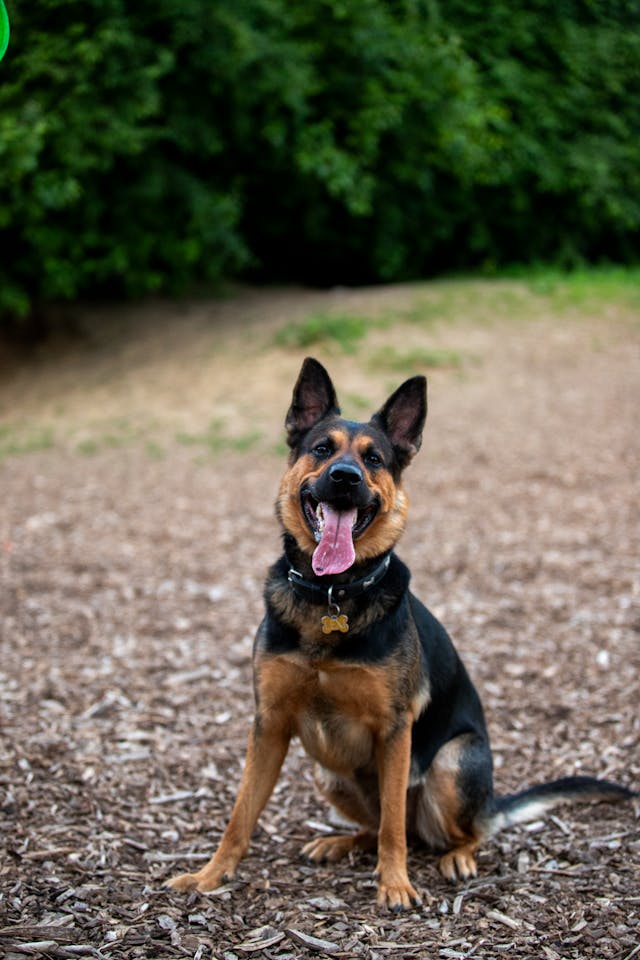
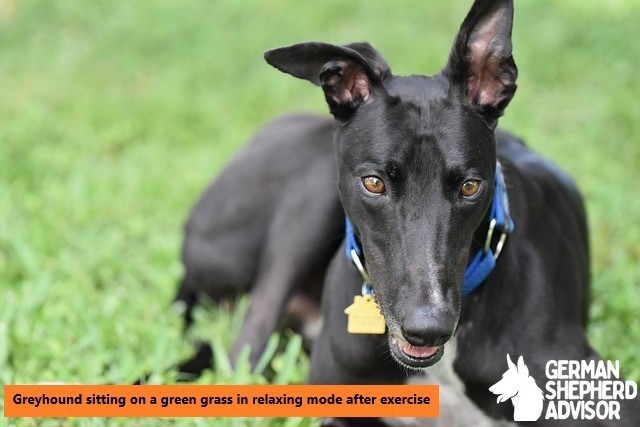
Image by: Akiko Campbell from Pixabay
German Shepherds and Greyhounds in a “dog shell”
Between the two breeds, Greyhounds are generally quiet and not “loud”; they rarely bark compared to German Shepherds. Both the German Shepherd and Greyhound are intelligent, loyal breeds, but their personalities differ. Greyhounds tend to be gentle, calm, and affectionate, often quieter and more reserved than German Shepherds. German Shepherds are alert, protective, and excel in obedience and working roles.
Due to their shorter coat, Greyhounds are easier to groom than German Shepherds. Comparatively, German Shepherds have thick furry coats that are prone to shedding and tangling if left unattended for longer than a few days. When you cross two magnificent and stately breeds of dog, you are bound to get a hybrid with both personality and looks — and the Shephound is exactly that. The Shephounds stand tall, with able-bodied physicality and are very intelligent. They are also very loyal and are trained easily.
Because the parent dogs, German Shepherds and Greyhounds, are distinct in their nature, the resulting Shephounds also come in varying physical attributes. It is important to know that as these dogs are a mix of two very different dogs, every puppy will be different. As the genes work in mysterious ways, one can never know what attributes are inherited from which breed.
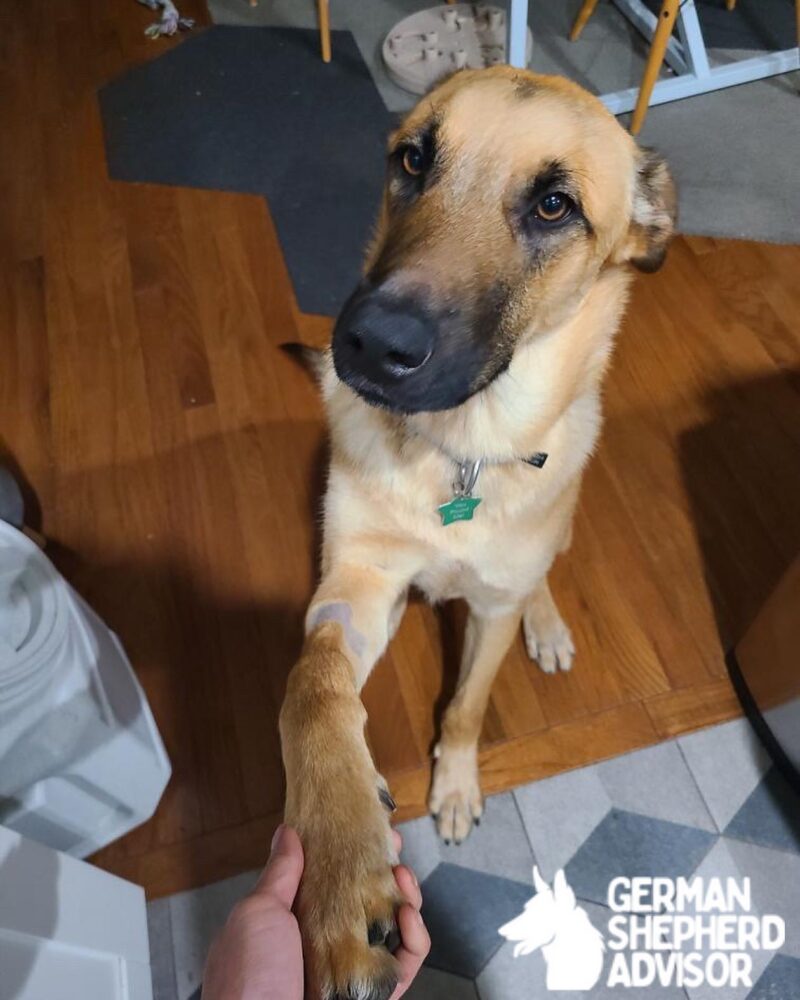
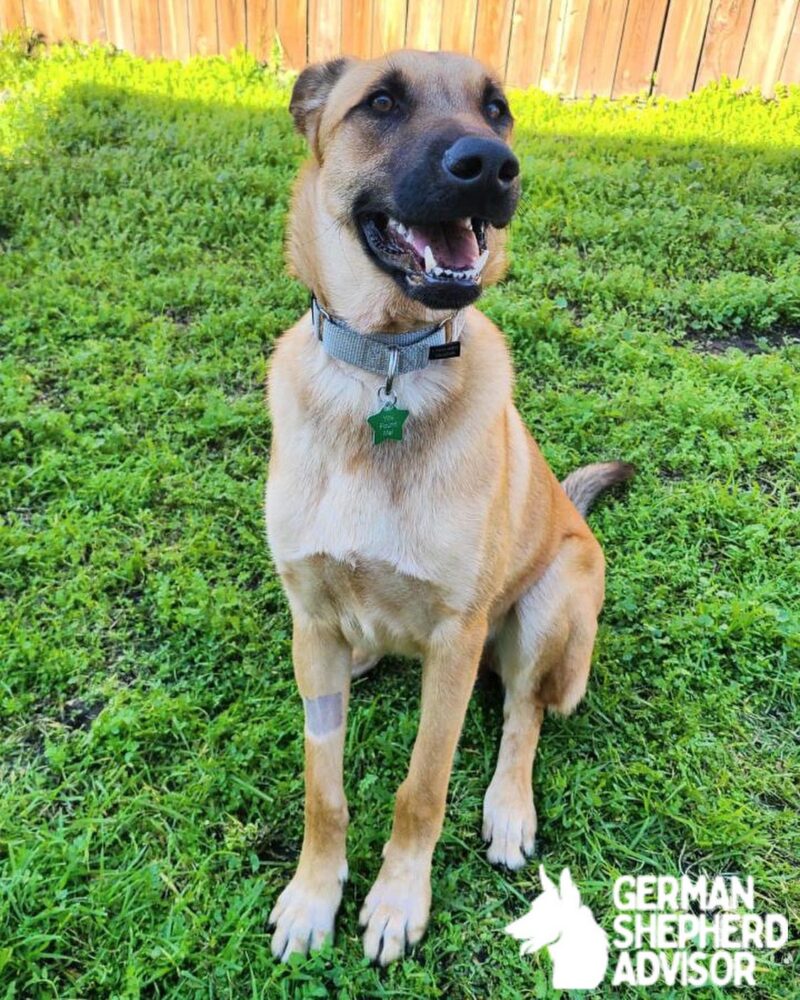
Photo credit: greysave
The main feature that is common in the Shephounds in terms of inheritance is its size, owing to the big size of both the parents.
Appearance and characteristics
A German Shepherd-Greyhound mix typically stands 24–30 inches tall and weighs between 60–100 pounds, depending on the dominant genes. They usually inherit the Greyhound’s long legs and deep chest, giving them a sleek, athletic build. Shepherd Greyhound or Shephounds are generally fit and muscular, with a deep chest and long legs that suggest the desirable streamline shape of the Greyhound, that give them a speed and agility advantage.
Coats can range from short and smooth (like a Greyhound) to medium and double-layered (like a Shepherd). Common colors include black and tan, brindle, sable, and fawn. German Shepherds CAN be solid black, and mixes can also inherit solid colors with some dogs having black masks or markings.
German Shepherd Greyhound mix comes with coats that vary from smooth or slightly wavy or curly, but generally short to medium in length, soft, short, sparse, and low-shedding, but sometimes they inherit a little of the Shepherd’s double coat.
German Shepherd Greyhound Mix Puppies
The litter size for this mix depends on the mother. A German Shepherd mother may have 5–9 puppies, while a Greyhound mother usually has 6–8. Each puppy’s looks and temperament can vary widely depending on which parent’s genes are dominant. It is impossible to know whether the baby pooch is going to look more like a German Shepherd or the Greyhound. Initially, the puppy has a tendency to be wary of strangers, but once they learn to trust you and everyone around them. Shephound puppies are playful and make excellent friends with children and grownups alike.
What do they eat?
As is the custom with any other dog, caution should be administered when feeding your Shephound or Shepherd Greyhound. Feed your Shephound a high-quality diet rich in animal protein, healthy fats, and complex carbohydrates. Because both parent breeds are large and active, choose large-breed dog food formulated to support joint and digestive health. Shephounds, like any other dog, are not cranky eaters and their diet is not overly complicated. Avoid overfeeding, as obesity increases the risk of hip dysplasia and bloat (GDV).
To minimize GDV risk:
- Feed smaller, more frequent meals
- Avoid vigorous activity right after eating
- Consult your vet about diet and feeding schedules
Once again, because Shephounds are large and active dogs, they need to stay hydrated and so will need plenty of water to be safe against dehydration. As is the case with other dogs, Shephounds are susceptible to a condition common among canines called Cherry eye. It is caused on the eyelids which makes it appear lumpy and swollen. The cause may be hereditary or an infection of some kind but can be cured by anti-inflammatory medicines or surgically, if the case is severe.
Lifespan
Given the exemplary genes of Shephound, generally it is as healthy as it gets. The German Shepherd’s lifespan is 9 to 13 years. A Greyhound lives up to a good 10 to 13 years. So expect a Shephound or Shepherd Greyhound to live 10 to 13 years and depending on their diet, hygiene, training and regular visitation to vets, they can outlive their parents.
Grooming
Grooming depends on coat type. If your Shephound inherits the Greyhound’s short coat, brushing once a week and an occasional bath will suffice. If it inherits the Shepherd’s double coat, brushing 2–3 times per week and extra care during shedding season is needed. Grooming the hybrid is a lot easier if it has inherited the Greyhound ‘s short haired fur. Keeping it clean is manageable and being single coated, it will not shed a lot of hair. Even primping them with a wet cloth would do the trick just fine. Greyhounds shed moderately, not heavy, but not “very low” either.
Those who have inherited their fur from the German Shepherds will, consequently, have a lot more hair and will require grooming suited to their fur type. The long and thick coat is predisposed to tangling which can discomfort the dog. Ignoring the situation can make it harder for you to clean and groom the dog in general.
Brushing it every week can make your and your dog’s life easier and will allow the Shephound’s hair to be healthy and grow naturally. It will still be prone to shedding twice a year and more than usual in the shedding season. Apart from this, giving them regular baths and tooth brushing, irrespective of which parent they have taken after, is also best suited for them.
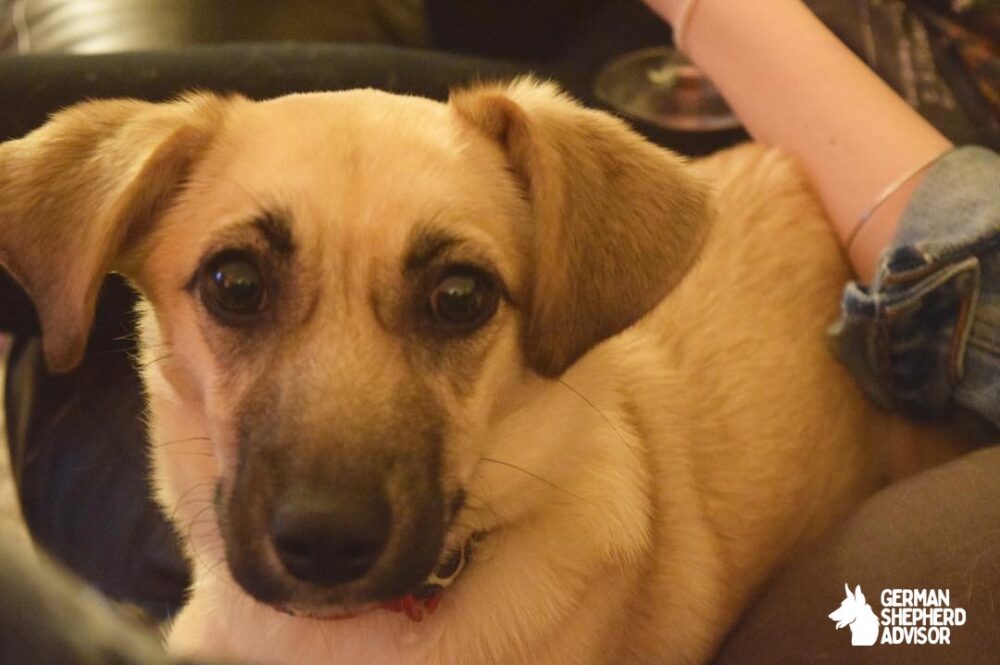
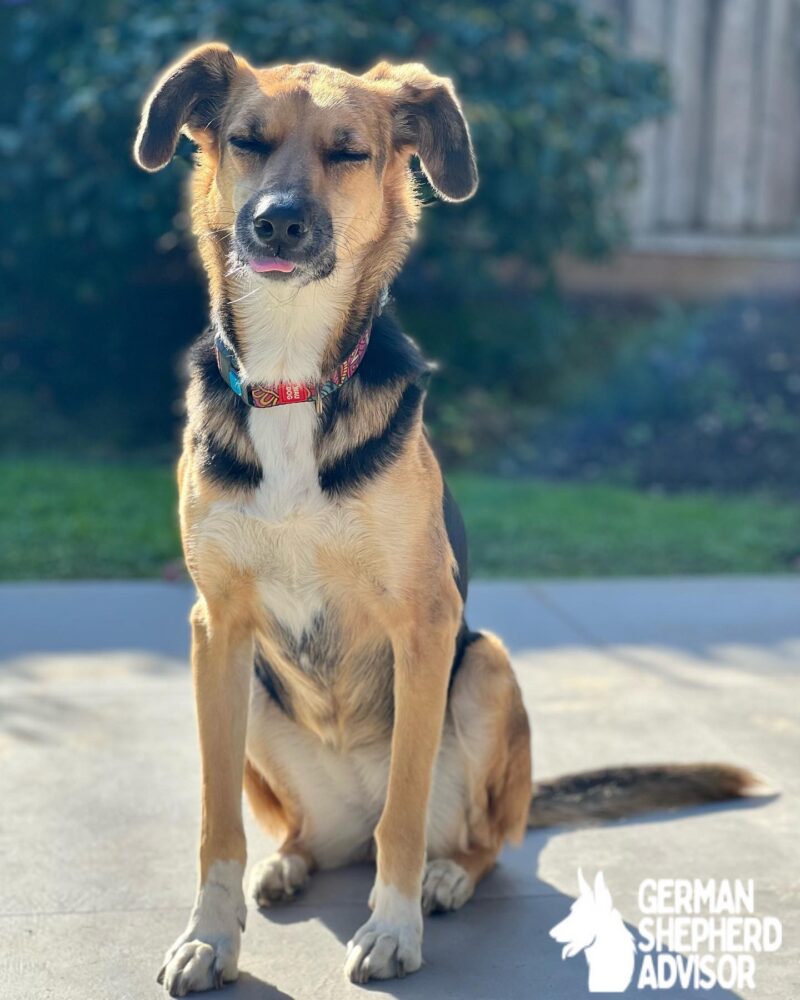
Photo credit: winnietheshephound, arisha.shephound
Exercise
Your Shephound will need at least 60–90 minutes of exercise daily — combining brisk walks and off-leash play. Mental stimulation is crucial too; interactive toys, training sessions, and scent games prevent boredom.
Training
According to the Dog Intelligence Ranking, German Shepherds stand on the 3rd position meaning the obedience level is 95%, requiring only about five attempts to learn a new command. Greyhounds, in comparison, are placed on number 46. This does not mean they are ‘bad’ dogs — they are simply independent and less motivated by obedience tasks.
The silver lining? At least they are eager to please you, which sort of makes up for their disobedience. The answer to how trainable are the Shephounds lies in the gene build-up of the dog. The Shephound can be easily trained in the house and taught fundamental compliance.
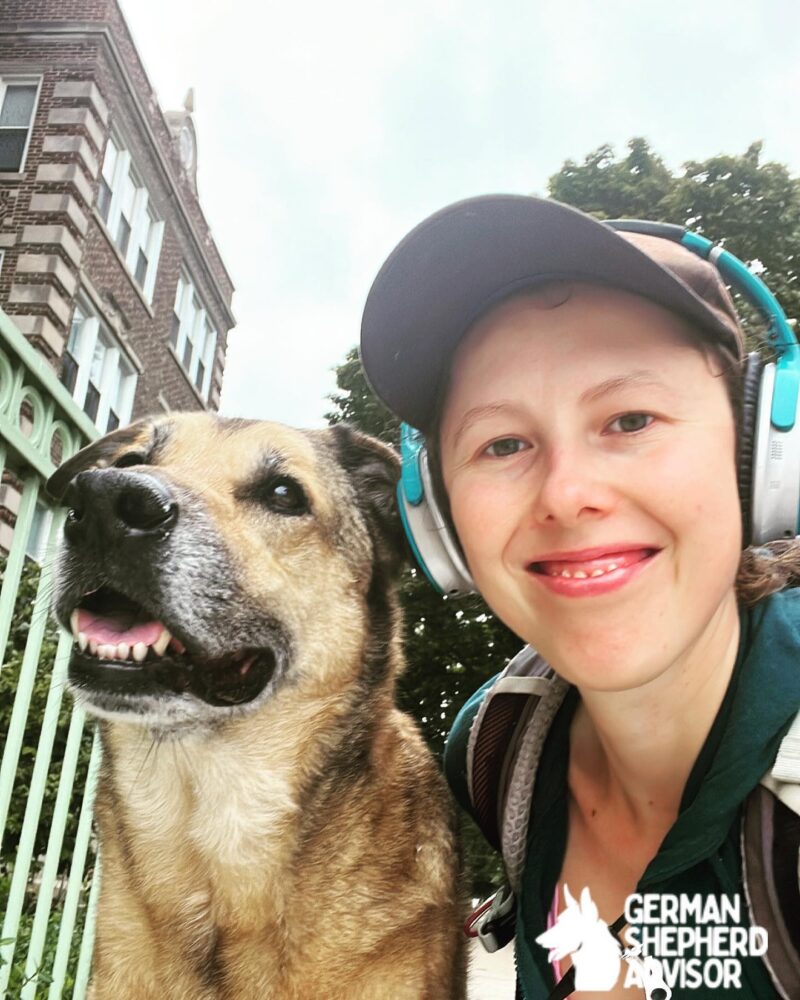
Photo credit: alla_kireeva_td
Disposition
Shephounds are affectionate, loyal, and intelligent dogs. When socialized early, they coexist well with other pets and children. However, due to their size and speed, supervision is recommended around toddlers. They bond closely with their families and are protective without being overly aggressive. Your choice of dog breed largely depends on temperament. Who does not want their dog to have a lovely disposition! The German Shepherds and Greyhounds are naturally active, playful and loyal and their brood will be too.
If the Shephounds have dominant Greyhound genes, they’ll probably need a little more work in training them because of their natural inclination towards “prey drive”. Other than that, Shephounds are normally finely tempered and make excellent family dogs. They would love to snuggle with you on your lazy and comfy days and are extraordinarily affectionate towards the family they live with.
She Shephound vs He Shephound
A female Shephound is probably shorter and will be lighter in weight when compared to a male Shephound.
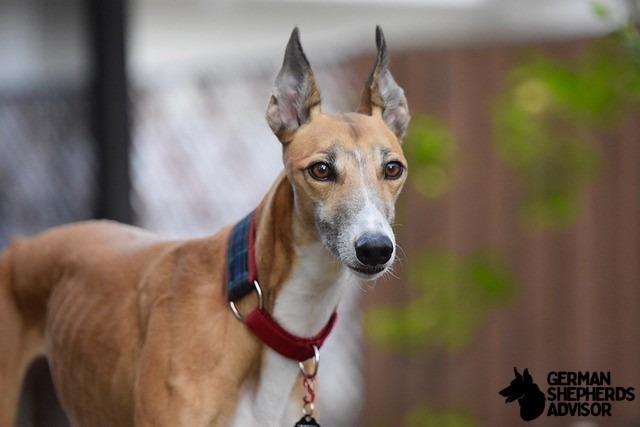
Image by: Akiko Campbell from Pixabay
How much are Mix worth?
Because the Shephound is a rare hybrid, prices vary widely depending on region and breeder reputation. Expect $800–$2,500 USD in most areas. Always choose reputable breeders who provide health clearances for hips, elbows, and heart. Both the German Shepherds and Greyhounds are greatly desired dog breeds.
Because the German Shepherd and Greyhound mix is not very customary owing to the fact that both the dog breeds are very expensive. The breeders are not usually motivated to breed this mix. But when they do, they make sure you pay an arm and a leg for these Shephounds.
Does this mix behave well around other pets?
With proper socialization, most Shephounds can live peacefully with cats, though prey drive may appear in some individuals. It is of paramount importance that your dog is trained for it. Because being the bigger animal, it can otherwise hurt the smaller pets around your house. Other than that, Shephounds are an excellent decision if you want to bring in a new pet into your house that already has a different selection of pets.
Relationship with other dogs
Shephounds are frisky creatures and befriending them with other playful animals is a healthy idea for their overall wellbeing. If all the dogs, including your Shephound, are introduced properly. There is no reason why your Shephound should not get by with any other dog in the house. As Shephounds are compliant by nature, it is obviously not a good idea to keep them with dogs that are not friendly and are more territorial.
Safety of children around German Shepherd Greyhound Mix
Large dogs like the Shephound can live safely with children when raised and trained properly. They are gentle and protective but can accidentally knock over small kids during play. Supervise interactions and teach children respectful boundaries. Always supervise large dogs with small children as recommended by AKC.
It is a general misconception among people who don’t own dogs or own the smaller ones that it is unsafe to have large dogs in house with children in it. Contrary to this belief, if the Shephound is introduced to the child early on, they prove to be very caring, kind and gentle towards them. The dogs are also very protective.
This, however, does not mean that you leave your Shephound unattended with your children. Be particularly careful when you have toddlers or infants because these big dogs are playful and can get disorderly if carried away. If taken necessary precautions, Shephounds make wonderful family dogs. It is easy to do away with their misconduct like growling and biting or whatever they can endanger your child with, by training them against it.
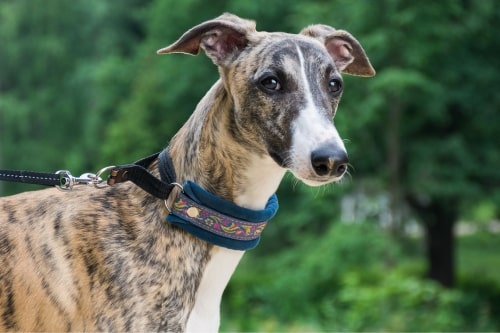
And rounding up
The German Shepherd Greyhound mix is a truly unique hybrid — blending ancient elegance with modern intelligence. Loyal, athletic, and affectionate, this dog thrives in active homes where it can run freely and engage mentally. They are very high-energy and intelligent dogs, and it is important that Shephounds have plenty of space to stay active. Rest assured, go ahead and make them a part of your life and I hope you are just that lucky to get and afford one, they are sure to make extraordinary pets.
Sources
- https://en.wikipedia.org/wiki/Greyhound
- American Kennel Club (AKC) – official parent-breed health profiles: German Shepherd Dog – Health, Greyhound – Health.
- PetMD (veterinarian-written articles) – medical explanations and prevention tips: Bloat (Gastric Dilatation-Volvulus) in Dogs, Hip Dysplasia in Dogs.
- VCA Animal Hospitals – veterinary client resources: Elbow Dysplasia in Dogs, Cherry Eye in Dogs.
- German Shepherd (FCI Standard No. 166).
- Greyhound (FCI Standard No. 158).